

Few questions are as universal and deeply human as the one that emerges in moments of suffering:
“Why did this happen to me?”
We ask it when we lose a job we depended on. We ask it when a relationship unexpectedly falls apart. We ask it when a loved one dies, when a serious illness changes the course of our lives, when we experience betrayal, failure, disappointment, or hardship despite our best intentions.
At some point, every person encounters events that challenge their expectations about how life should unfold. These moments often confront us with uncertainty, vulnerability, and pain. They force us to reconsider assumptions about ourselves, other people, and the world.
Yet while suffering may be universal, the way we respond to it is not.
This article explores different mental models for approaching adversity in a productive manner. We will examine two contrasting ways of interpreting difficult experiences, discuss the importance of humility, compare spiritual and materialist perspectives on suffering, and ultimately argue that regardless of one’s beliefs, the most valuable response is often the same: the commitment to learn, grow, and become a better version of oneself.

Two paths through suffering
When confronted with a painful event, people often move toward one of two broad psychological orientations.
The first orientation centers on self-pity, resentment, and fixation on the unfairness of the situation.
The second centers on reflection, learning, and personal growth.
These are not rigid categories. Most people experience elements of both. Grief, sadness, anger, and confusion are natural responses to adversity. The difference lies not in whether these emotions arise, but in what we do with them over time.
The path of passive suffering
In the first orientation, the question “Why did this happen to me?” becomes a closed loop.
The individual repeatedly revisits the event, focusing primarily on its injustice and on the pain it caused. Their attention remains fixed on the problem rather than on their response to it.
Their thoughts may sound like:
- Why am I always the one who suffers?
- Why does life treat me unfairly?
- Why do bad things always happen to me?
- There is nothing I can do.
This mindset often leads to rumination, helplessness, resentment, and emotional stagnation. Energy becomes consumed by reliving the event rather than adapting to it.
Importantly, recognizing that something is unfair is not a mistake. Many events truly are unfair. People lose loved ones unexpectedly. Honest employees lose jobs during economic downturns. Good people become ill. Acknowledging reality is necessary.
The problem arises when the recognition of unfairness becomes the end of the inquiry rather than the beginning of it.
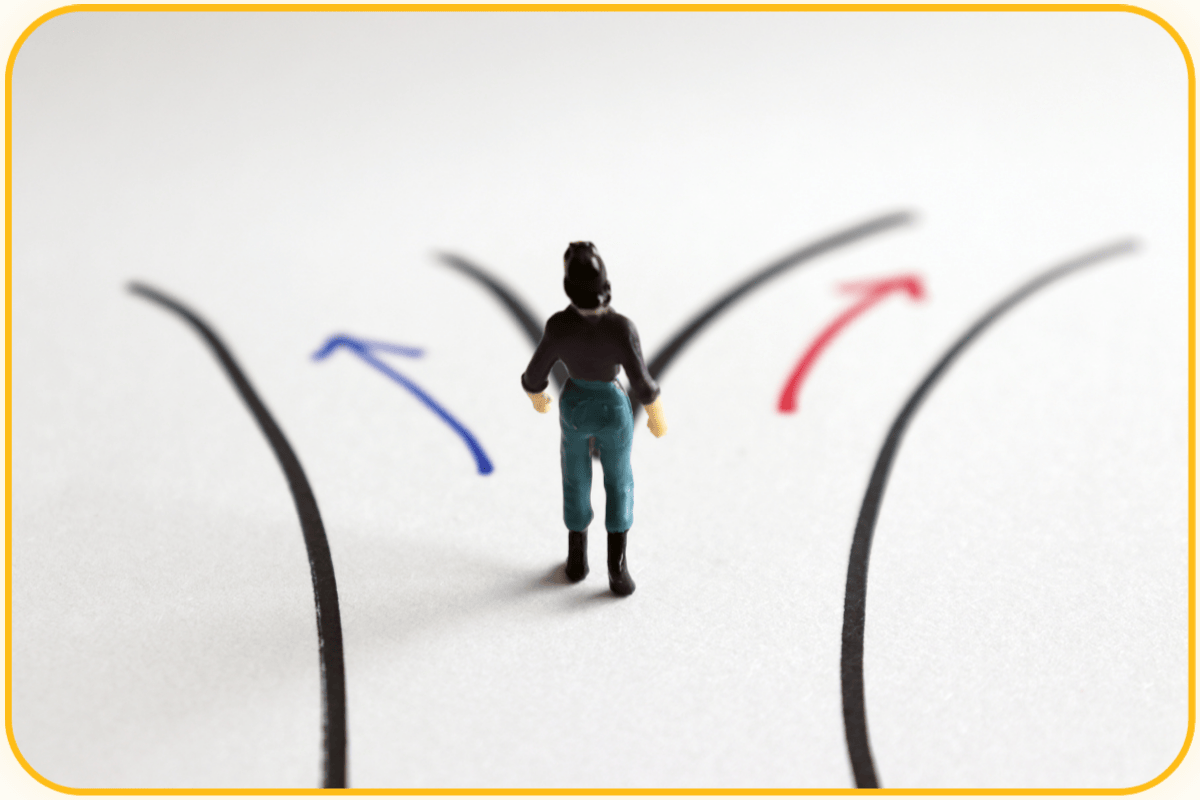
The path of reflection and growth
In the second orientation, the same question becomes an invitation to deeper exploration.
Instead of stopping at “Why did this happen?”, the individual asks:
- What can I learn from this experience?
- What strengths am I being called to develop?
- How do I want to respond?
- What assumptions about life are being challenged?
- What kind of person do I want to become because of this?
This approach does not deny suffering. It does not romanticize pain or pretend that tragedy is desirable. Rather, it recognizes that while we cannot always choose our circumstances, we can influence our response to them.
Modern psychology offers support for this perspective. Researchers Richard Tedeschi and Lawrence Calhoun introduced the concept of post-traumatic growth, describing positive psychological changes that can occur after major adversity. Studies have found that a substantial percentage of individuals report positive developments following traumatic experiences, including increased appreciation for life, stronger relationships, greater personal strength, and deeper meaning and purpose.
This does not mean trauma is good. It means that growth and suffering are not mutually exclusive.
A person can be wounded and wiser at the same time.
The crucial distinction is whether suffering becomes a dead end or a catalyst.
The importance of humility
One of the most valuable qualities a person can cultivate during difficult times is humility.
Unfortunately, humility is often misunderstood.
Many people associate humility with weakness, low self-esteem, or believing oneself to be inferior. Genuine humility is something entirely different.
Humility is the willingness to see reality as accurately as possible while recognizing the limits of one’s own understanding.
When life proceeds according to plan, it is easy to believe that we understand ourselves and the world fairly well.
Adversity challenges this illusion.
A serious illness may reveal how fragile we truly are.
The death of a loved one may expose how much we took for granted.
Professional failure may challenge assumptions about competence and security.
In these moments, humility allows us to acknowledge a profound truth:
We do not know everything.
We do not fully understand why events occur.
We do not fully understand ourselves.
We do not fully understand the future.

The proud person assumes certainty.
The humble person remains open to learning.
The proud person believes their current perspective is complete.
The humble person recognizes that their perspective may be partial.
Humility creates the psychological conditions necessary for growth because growth requires the admission that there is still something to learn.
In this sense, humility is not about thinking less of yourself. It is about seeing yourself more accurately.
It is the recognition that reality is often more complex than our immediate interpretations.
Do we need to believe in something greater?
At this point, an important philosophical question emerges.
Is it necessary to believe in God, destiny, karma, providence, or some higher intelligence in order to benefit from suffering?
Many spiritual traditions answer yes.
From a spiritual perspective, painful experiences may possess meaning beyond our immediate understanding. There may be lessons, opportunities for growth, or purposes hidden within events that initially appear random or unjust.
According to this view, when a person asks, “Why did this happen to me?” the answer may exist even if it is not yet visible.
Life may be operating within a larger moral or spiritual framework.
This belief often provides comfort, hope, and trust during difficult periods.
However, there is another perspective.
Materialist and secular philosophies generally reject the assumption that suffering possesses a built-in purpose. According to this view, events occur because of natural causes, biological processes, human decisions, probability, and chance.
A job loss may result from economic conditions.
A disease may result from genetic and environmental factors.
An accident may result from a chain of physical circumstances.
The universe is not necessarily sending messages or teaching lessons.
Yet this perspective does not eliminate the possibility of growth.
Instead of asking, “What purpose does this event serve?” a person might ask:
“What purpose will I create from this event?”

The spiritual perspective tends to search for meaning that already exists.
The materialist perspective tends to create meaning through conscious choice.
Despite their philosophical differences, both approaches often lead to remarkably similar behavioral conclusions.
Both can encourage courage.
Both can encourage responsibility.
Both can encourage compassion.
Both can encourage learning.
Both can encourage resilience.
In other words, while people may disagree about why suffering exists, they often agree about how one should respond to it.
Why attitude matters more than explanation
Human beings naturally seek explanations.
We want to know why events occur.
We want certainty.
We want understanding.
Yet there is an uncomfortable reality: many questions never receive complete answers.
Some tragedies remain mysterious.
Some losses never make sense.
Some events seem entirely arbitrary.
If our peace depends upon obtaining a perfect explanation for everything that happens, we may spend much of our lives waiting.
This is why attitude becomes so important.
The most productive question may not always be:
“Why did this happen?”
Instead, it may be:
“What will I do with what happened?”
This shift moves attention from speculation to action.
From explanation to responsibility.
From passivity to growth.
Psychological resilience often emerges not from understanding every cause but from developing a constructive response.
The same event can produce bitterness in one person and wisdom in another.
The difference frequently lies in the interpretation and response rather than in the event itself.

The power of relationships
Another important lesson from modern research concerns the role of human connection.
The Harvard Study of Adult Development, one of the longest-running studies of human life ever conducted, has repeatedly found that the quality of our relationships is among the strongest predictors of long-term happiness, health, and well-being.
This finding is particularly relevant during periods of suffering.
Pain often tempts people toward isolation.
Yet growth frequently occurs through connection.
Sharing struggles with trusted friends, family members, mentors, support groups, or counselors can provide perspective, encouragement, and emotional resilience.
Difficult experiences remind us that we are not meant to carry life’s burdens entirely alone.
They can become opportunities not only for self-discovery but also for deeper connection with others.
Creating a space for reflection
Ultimately, the question “Why did this happen to me?” is neither good nor bad.
Its value depends on what follows.
If it becomes an endless cycle of self-pity and resentment, it can trap us in suffering.
If it becomes an invitation to reflection, learning, and growth, it can become one of the most powerful questions we ever ask.
Perhaps the most important practice is to create a deliberate space for active reflection.
A space where we ask:
- What kind of person do I want to become?
- What values do I want to embody?
- How can I respond more wisely next time?
- What strengths should I develop?
- What lessons can I carry forward?
Whether one believes in God or not, whether one sees purpose as discovered or created, this reflective process remains valuable.
Life will continue to present unexpected challenges.
New losses, disappointments, failures, and uncertainties will arise.
The goal is not to eliminate hardship but to become better equipped to meet it.
When we cultivate humility, remain open to learning, and consciously align our actions with our values, suffering can become more than something to endure.
It can become an opportunity to refine our character.
The question is not merely why something happened.
The deeper question is:
Who do I want to become because it happened?
That question has the power to transform adversity from a source of helplessness into a catalyst for growth, wisdom, and a more meaningful life.
