

As the calendar turns, the siren song of “more” begins to blare. We are told to upgrade our skills, maximize our output, and crush our new goals. But for many high-performers, the problem isn’t a lack of achievement—it’s a lack of resonance.
The data is sobering: Gallup reports that nearly 80% of the global workforce is disengaged. We aren’t just tired; we are “meaning-starved.” While 70% of employees say their sense of purpose is defined by their work, only 32% feel deeply connected to their organization’s mission.
The gap between our daily “micro-actions” and our inner values creates a friction that no paycheck can lubricate. To bridge this gap, we don’t need a new career path; we need a new way of thinking. Here are three mental models to help you stop creating noise and start creating meaning.

1. The Franklin Framework: purpose through practice
Benjamin Franklin didn’t become a polymath by accident. He utilized a “virtue chart” to track small, daily habits. In the context of purpose, this framework suggests that purpose is not a destination you find, but a habit you build.
How to Apply It:
Instead of waiting for a “grand calling,” identify your natural inclinations—perhaps it’s making people laugh, organizing chaos, or storytelling.
- The Micro-Move: Choose one small action rooted in a strength.
- The Tracker: Use a physical journal or a simple digital note. Every day, mark whether you executed that one move (e.g., “I helped one colleague feel heard today”).
- The Result: Over time, these small “wins” aggregate into a sense of identity. You aren’t just a “Manager”; you are someone who builds people up.

2. Second-Order Thinking: the “And Then What?” filter
Meaningful work requires value-adding, but even the best intentions can backfire if we don’t consider the ripple effects. Second-order thinking is the practice of looking past the immediate consequence of an action to see the long-term impact.
How to Apply It:
Before you act on a “purposeful” impulse—like using humor to lighten a tense meeting—ask yourself, “And then what?”
- First-order effect: People laugh, and the tension breaks.
- Second-order effect: If the timing is wrong (e.g., during a budget cut discussion), the team might perceive you as someone who doesn’t take the crisis seriously, leading to a loss of trust.
- The Goal: Use this model to refine how you deliver your purpose so it lands with the intended impact.

3. Bayesian Learning: the art of the pivot
Many people feel like failures when their attempt at “living with purpose” doesn’t work. Bayesian Learning teaches us that purpose is a learning process, not a fixed point. It’s the practice of updating your beliefs based on new evidence.
How to Apply It:
- Identify your “Prior Belief”: “I am most helpful when I provide all the answers.”
- Gather New Data: You notice that when you provide all the answers, your team stops taking initiative.
- Update the Probability: Realize that being a leader is 90% coaching and 10% answering. Update your actions accordingly.
Real-Life Story: the Febreze pivot
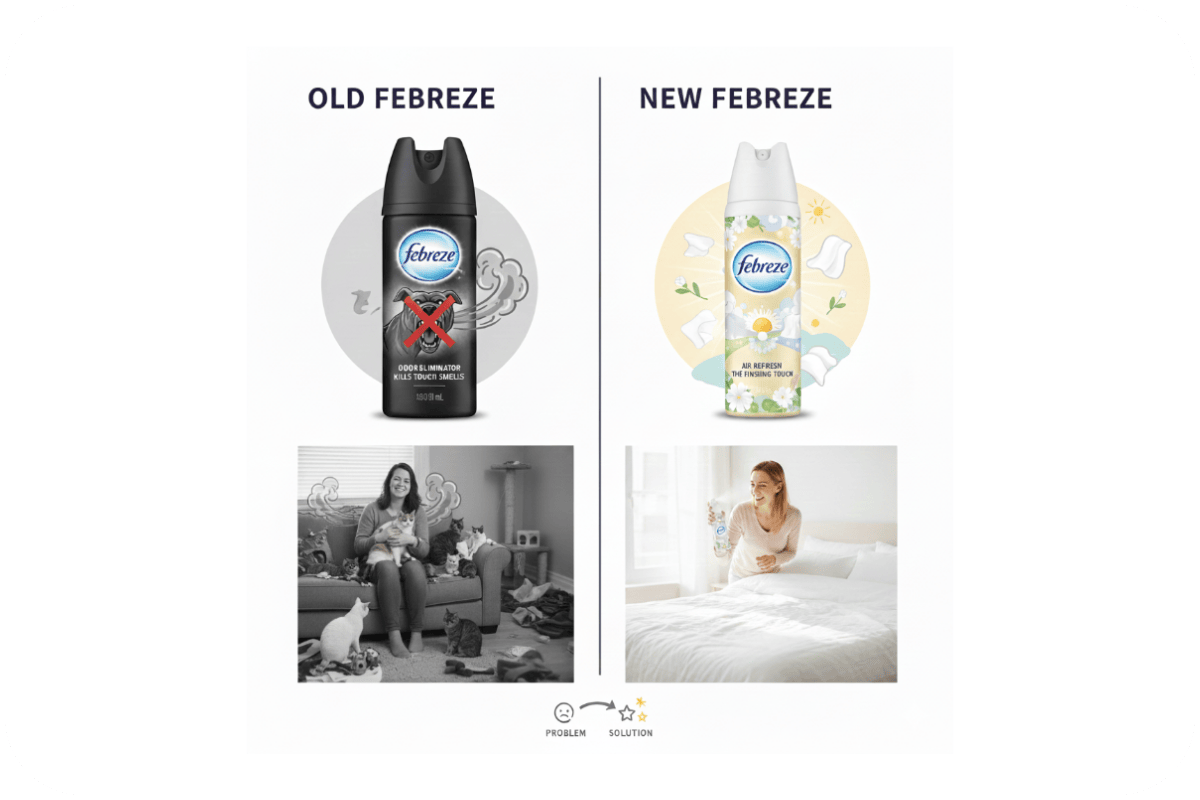
In the mid-90s, P&G launched Febreze with a clear purpose: eliminate bad odors for smokers and pet owners. It was a scientific marvel, yet it flopped.
Applying what we now call Bayesian Learning, researchers went into homes and realized that people with smelly houses became “nose-blind.” The product had no “trigger.” However, they found one woman who used it on her clean sheets as a “finishing touch” to her cleaning ritual.
P&G updated their belief. They shifted the purpose from “fixing a problem” to “providing a reward.”: a finishing touch to a cleaning ritual. By changing their “Prior Belief” based on real-world data, they turned a failing product into a billion-dollar brand.
The Lesson: If a global brand can refine its purpose based on feedback, so can you. Your purpose is allowed to evolve as you gather more data about yourself and the world.
Your Purpose Toolkit
To stay aligned, you need more than just inspiration; you need infrastructure:
- A “Purpose Tracker”: A simple log to record your Franklin-style micro-moves.
- The “And Then What?” Sticky Note: A physical reminder on your monitor to trigger second-order thinking.
- An “Insight Log”: A place to record your Bayesian updates when you “miss the mark.”
Living with purpose isn’t about being perfect; it’s about being intentional. As you head into the new year, don’t just ask what you want to achieve. Ask who you want to be in the micro-moments of your day.

