

You’re in a job that feels stable. The paycheck is reliable. You know the people and the rhythm. But here is the most emotionally loaded question you can ask yourself:
Should I stay — or should I go?
Most people freeze. They wait. They rationalize. And in doing so, they let someone else—the market, their manager, or their fear—make the decision for them.
This article dissects this modern career dilemma, moving beyond comfort versus risk, and focusing on the true cost of standing still.

The Myth of Safety vs. The Reality of Stability
We often confuse safety with stability.
- Staying feels safe. You know the routine; the immediate future is predictable.
- Leaving feels risky. You might gain purpose and momentum, but it also means job search fatigue and financial gaps.
But safety is fleeting. The critical question for any professional should be: Is this position funding my future, or is it just funding my present?
If you are only surviving—not saving, not learning, and not growing—you are mistaking comfort for resilience.

The Data Behind the “Smart Stay”
The era of the “Great Resignation” is fading; the bold exits are slowing.
- Quit rates are down. According to the U.S. Bureau of Labor Statistics, quit rates have settled back to 2.3%, the same level as before the pandemic.
- Job switching is less rewarding. Workers who change jobs now see an average salary bump of just 5.2%. “The market has normalized,” says Lacey Kaelani-Dehan, CEO of Metaintro.
The data confirms: the stay-put strategy is rising. But the critical reflection remains: Are people staying because it’s smart, or because it’s simply safe?

The Hidden Cost of Standing Still: Opportunity Cost
The true power in this decision isn’t in knowing the answer immediately, but in asking a better question:
What’s the opportunity cost of staying?
Smart decisions aren’t just about the salary you gain; they’re about the growth, momentum, and meaning you will miss if you don’t move. Every choice carries a hidden cost. Ignoring the opportunity cost can trap you in yesterday’s logic.
What are you giving up by choosing comfort?
- The promotion you didn’t chase.
- The skill you didn’t build.
- The version of you that didn’t evolve.
This dilemma—stay or go—isn’t just about the job; it’s about identity, timing, and the stories we tell ourselves. To make the smart choice, you must first learn to think better, not just harder.
Escape the Traps: Three Mental Models for Clarity
When facing this crossroads, your mind will naturally fall into familiar cognitive traps. The key to clarity is applying proven mental models to challenge these biases:
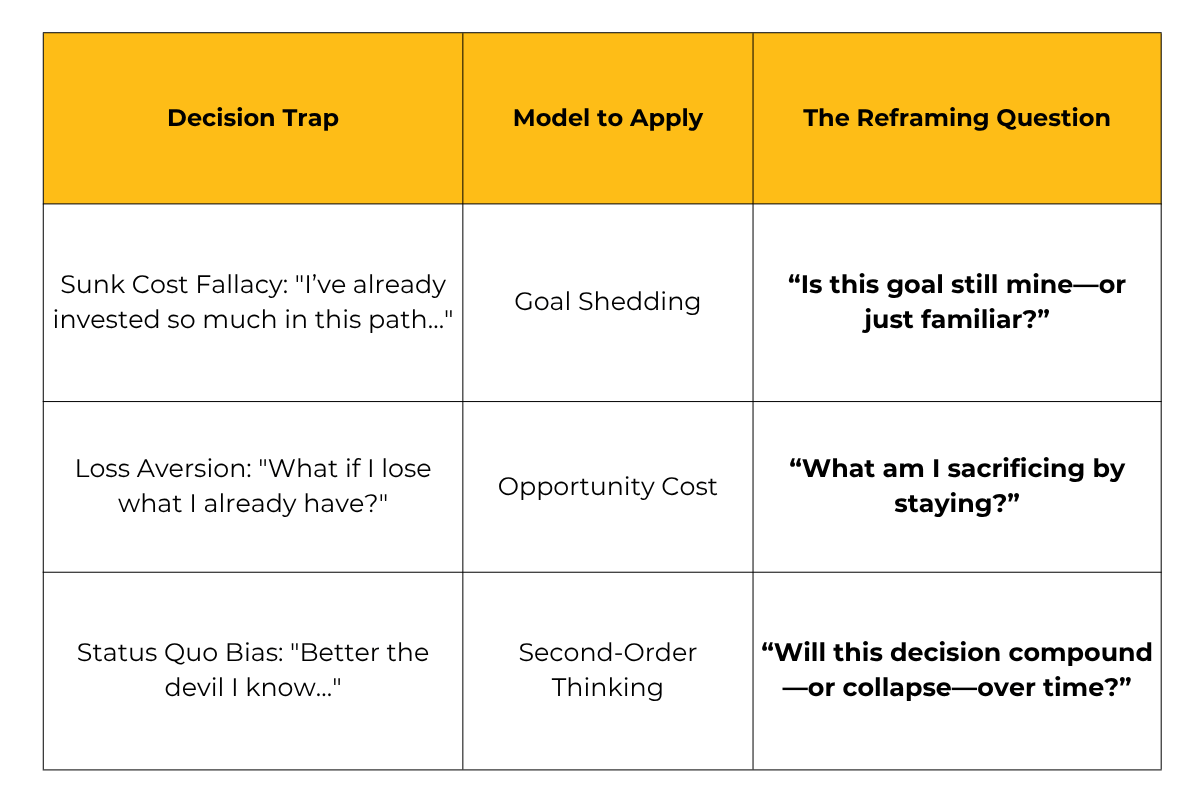
By reframing the question, you shift from clinging to clarity to making space for a new focus.
The Inversion Test: What Will You Regret?
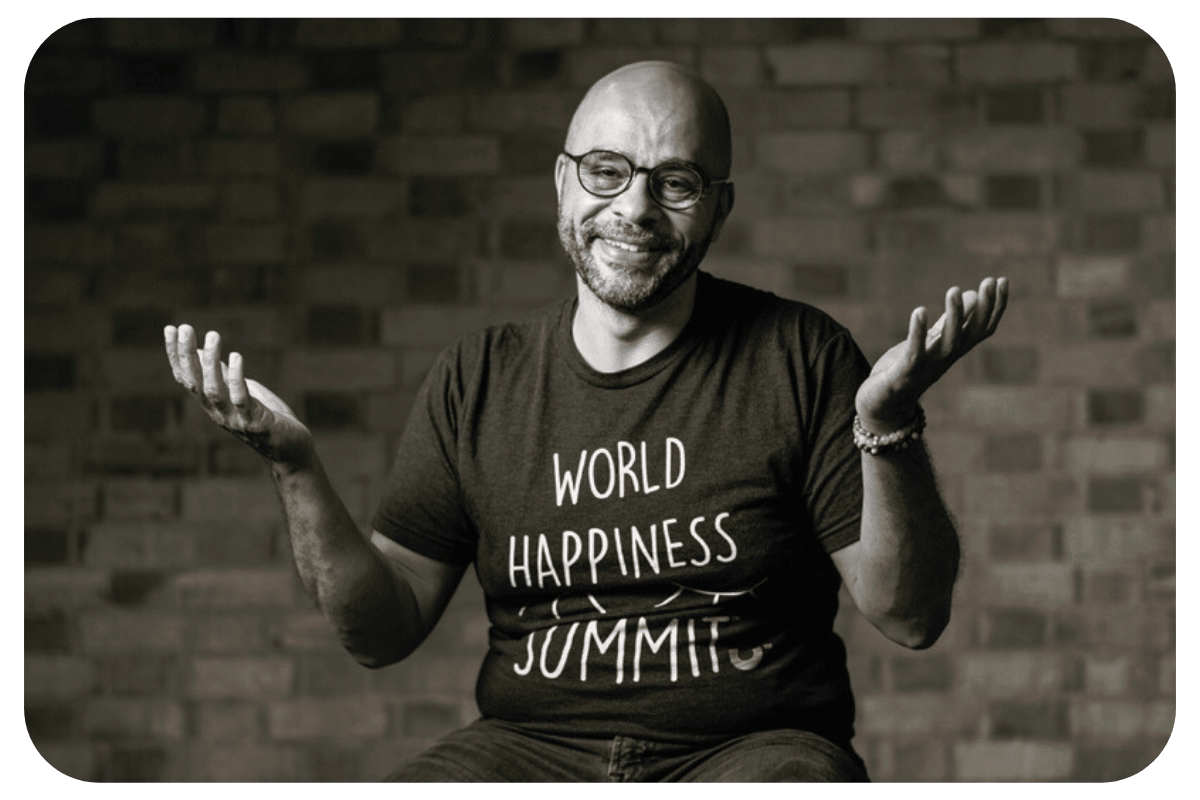
Sometimes, the best way to choose is to flip the question entirely, using Inversion Thinking.
At 29, Mo Gawdat had “it all”—wealth, success, and a high-ranking role at Google X. But behind the scenes, he was battling clinical depression. Success, it turned out, didn’t equal happiness.
The quiet questions (“Is this all there is?”) grew louder. Then, tragedy struck: his son Ali died unexpectedly. The loss clarified everything.
Mo flipped the script. Instead of asking, “What will I lose if I leave?” he asked, “What will I regret if I stay?”
He realized he would regret not using his skills to serve something more meaningful. He would regret waiting for a “perfect” time that might never come. This singular clarity—focusing on the future self he wanted to protect—led him to leave, write Solve for Happy, and launch a global movement. It wasn’t the obvious choice, but it was the one he wouldn’t regret.
Conclusion: Activating Your Decision
You’ve unpacked the emotional layers. You’ve challenged your biases. You’ve reframed the question from “Should I leave?” to “What will I miss if I stay?”
Now it’s time to move from reflection to clarity. You are not stuck. You are deciding. And that is a very different kind of power.
The ultimate goal is to choose with intention.
Tool Highlight:

If you are still struggling to visualize the trade-offs, we built a dedicated tool to help you apply these concepts practically:
👉 Try the Opportunity Cost Coach now
This GPT helps you identify exactly what you’re giving up with each choice, making the trade-offs visible, not just emotional.
Smart decisions aren’t just about outcomes—they’re about how you think through them.

