

Novelty‑seeking isn’t a foreign concept to anyone building something ambitious. You know the feeling well — that electric surge that hits the moment a new possibility appears. A fresh business idea. A new workout routine. A promising relationship. A clever way to save money. Before you even notice, you’re already sprinting toward the next “this could change everything” moment… and abandoning the last one halfway through.
We live in the most stimulation‑dense era in human history. Social media alone can deliver more “newness” in ten minutes than our ancestors encountered in a month. No wonder sticking with anything — whether it’s learning data analytics or committing to a career path — feels harder than ever. The world keeps dangling shiny objects, and our brains keep lunging at them.
While writing the second book in the How Smart People Think series, I found myself falling into the same trap. Every chapter sparked five new angles, each one exciting enough to become its own book. I had to course‑correct repeatedly. That experience pushed me to investigate the mechanism behind this thrill — the same mechanism that keeps us scrolling long after we’ve already found what we were looking for.

What exactly makes us crave novelty?
And more importantly: how do we recalibrate the reward system so we can finish what we start?
The answer lies in one dopamine pathway — the mesolimbic circuit — the one responsible for the intoxicating rush of anticipation. But it’s only one of four pathways, and when it dominates, it hijacks our motivation. To break the cycle, we don’t need to suppress our love for new ideas. We need to rebalance the system so progress, consistency, and depth feel rewarding again.
The Novelty‑thrill circuit
When I was researching how speed pushes us into terrible default decisions — like sending an impulsive venting email to your boss instead of pausing to ask whether this is the right moment or the right channel — I noticed something strange happening in my own mind.
The faster I consumed information, the more angles I uncovered, and the more my brain lit up with the feeling that I was onto something huge, dopamine hit.
Think of it like a slot machine.
The moment you think the next pull might pay off, dopamine fires — before anything actually happens.
That’s exactly what happened to me as I explored business frameworks where “speed is king.” Every new angle felt like a jackpot. My brain wasn’t rewarding the quality of the idea — it was rewarding the possibility of a bigger one just around the corner.
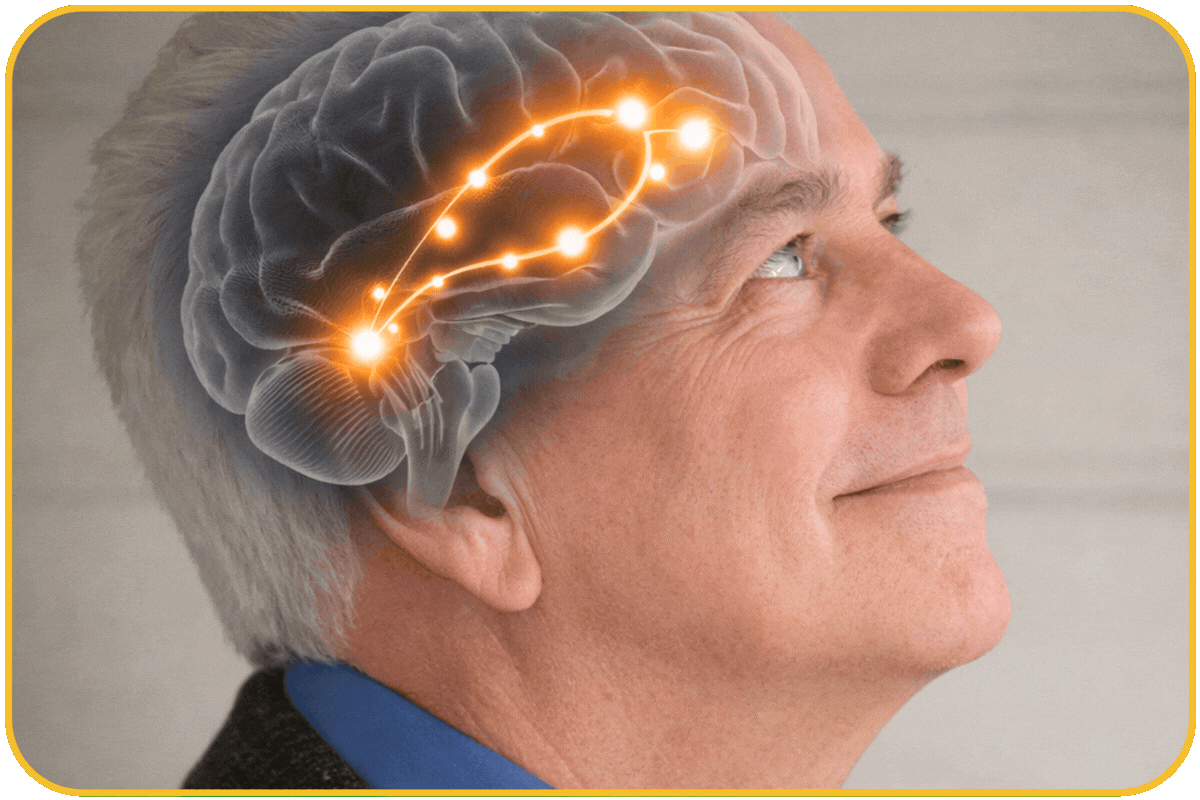
And the same thing happens to you.
Whenever you predict a positive outcome — a promising interview, a potential partnership, a new business opportunity — your brain releases dopamine in advance, simply because the outcome might be better than your current baseline.
Novelty triggers dopamine release before any reward occurs. It’s not the achievement that hooks you. It’s the maybe.
Anticipation triggers dopamine because the brain predicts a reward.
This is the mesolimbic pathway in action — the brain’s anticipation engine — and when it dominates, it pushes you toward speed, impulsivity, and shiny‑object chasing long before your rational brain has time to evaluate whether the next move is actually good.
“This is not enough” – entitlement hits
As the saying goes, “Nothing lasts forever.” And that’s exactly what happened to my dopamine spike when I started anticipating a “big new idea.” I hit a plateau the very next day. What felt electrifying at first quickly lost its shine once I became familiar with the different angles. What I had predicted would be better than the idea I was already pursuing… wasn’t.
That crash you feel — the moment the “new” starts becoming “not so new” — has a physiological explanation. Dopamine only increases when the outcome is better than expected, when the prediction error is large enough to make your brain say, “Wow, I didn’t expect it to be this good.”
Your brain compares what you expect to what actually happens.
- If the reward is better than expected → dopamine spikes.
- If the reward is exactly as expected → dopamine stays flat.
- If the reward is worse than expected → dopamine drops.
The dopamine reward system makes an unexpected positive experience feel unusually intense because the brain wasn’t predicting it. When something happens that we didn’t anticipate, the brain registers a prediction error — the difference between what we expected and what actually occurred. A positive prediction error (better than expected) triggers a dopamine spike, reinforcing learning and motivation. A negative prediction error (worse than expected) reduces dopamine firing.

As Robert Sapolsky writes in Behave:
“What was an unexpected pleasure yesterday is what we feel entitled to today, and what won’t be enough tomorrow.”
Our brains are constantly running a comparison algorithm, recalibrating what counts as “rewarding” based on what we’ve already experienced. The more stimulation we consume, the more our baseline shifts — and the hungrier we become for the next hit of novelty.
It’s the same pattern I notice in myself when I dive into new mental models: the first discovery feels exhilarating, the second feels satisfying, and by the tenth, I’m already searching for something even more complex, more elegant, more surprising. The brain adapts so quickly that what once felt extraordinary becomes ordinary almost overnight.
How do you commit?
By this point, the question echoing in your mind is probably:
How do I stay committed to the path I’m on?
If you’re naturally novelty‑seeking, it’s not because you’re flaky or undisciplined. It’s because your brain is wired to rely too heavily on the prediction‑error dopamine hit — that surge you get when something feels new, surprising, or potentially better than what you already have. And the more you learn about the world, the fewer things feel truly exhilarating or unexpected. The “wow” moments become rare. The baseline rises. The thrill fades faster.
This is exactly where things get interesting.
Because the mesolimbic pathway — the one responsible for anticipation, novelty, and the intoxicating “maybe this is it” feeling — is only one of the four dopamine reward circuits in your brain. When it dominates, you chase beginnings and abandon middles. But when the other three pathways are strengthened, something shifts: commitment starts to feel rewarding again.
The three other dopamine pathways
If the mesolimbic pathway is the spark, the thrill of “maybe this is it,” then the other three dopamine pathways are the engine, the steering, and the stability system that keep you moving long after the spark fades.
Most novelty‑seekers rely almost exclusively on the mesolimbic circuit — the anticipation pathway — which means they get addicted to beginnings and allergic to middles. But your brain has three other reward systems designed to make progress, consistency, and stability feel good too.
The Mesocortical pathway: The “Progress feels good” circuit
(VTA → Prefrontal Cortex)
If the mesolimbic pathway is the thrill of starting, the mesocortical pathway is the satisfaction of continuing.
This is the circuit that rewards:
- clarity
- progress
- meaning
- problem‑solving
- long‑term thinking
It’s the pathway that lights up when you say: “I’m actually getting better at this.”
Entrepreneurs who stick with projects long enough to see results aren’t relying on excitement — they’re relying on this pathway. When it’s strong, predictable progress feels rewarding instead of boring.
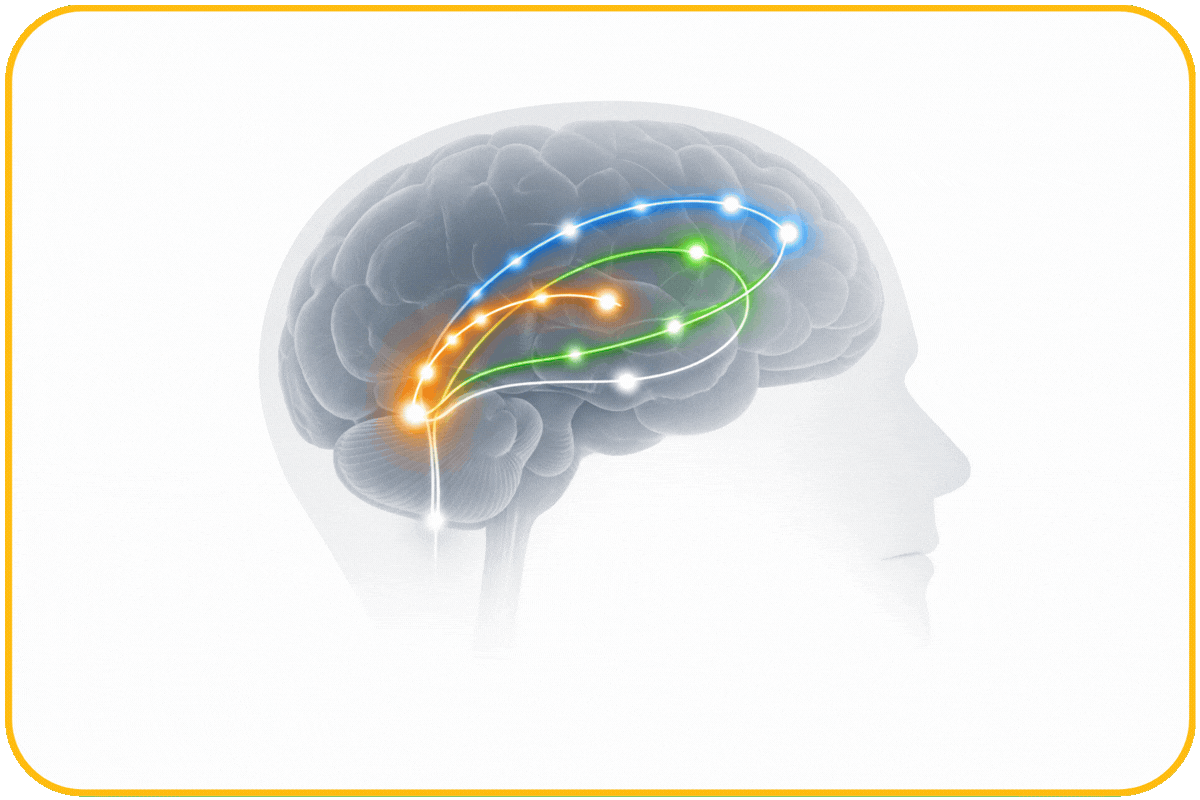
The Nigrostriatal pathway: The “Habits become automatic” circuit
(Substantia Nigra → Striatum)
This pathway is the foundation of discipline — not the dramatic kind, but the quiet, automatic kind.
It’s responsible for:
- routines
- repetition
- muscle memory
- consistency
- turning effort into autopilot
This is the circuit that makes brushing your teeth effortless, driving familiar routes automatic, and — with training — makes your business routines feel the same way.
When this pathway is strong, you don’t need motivation to act. You just act.
The Tuberoinfundibular pathway: The “Stay balanced” circuit
(Hypothalamus → Pituitary)
This one isn’t about motivation directly, but it’s the stability system that keeps everything else functioning.
It regulates:
- stress
- hormones
- mood
- physiological balance
When this pathway is dysregulated, everything feels harder — focus, patience, consistency, emotional regulation. When it’s stable, the other pathways can do their jobs.
Think of it as the grounding wire of your reward system.
The key to commitment

If novelty is what pulls you in, commitment is what keeps your life, and your projects, moving forward. But commitment doesn’t fail because you lack discipline. It fails because your reward system has been trained to light up for beginnings, not for the steady, predictable progress that real results require.
When the mesolimbic pathway dominates, you chase the thrill of anticipation. But the moment the “new” becomes familiar, the dopamine drops, motivation fades, and your brain starts scanning for the next spark. That’s not a character flaw — it’s a neurochemical imbalance.
The key to committing is rebalancing the entire reward system, so your brain doesn’t only reward novelty, but also rewards progress, consistency, and stability. When the other dopamine pathways strengthen, the middle of the journey — the part where mastery, depth, and compounding returns live — finally becomes satisfying.
Below you can download the 10 core practices that retrain your dopamine system to support long‑term focus and follow‑through. These are the habits that make commitment feel not just possible, but genuinely rewarding.
