

“Mental models” has become one of those terms that shows up everywhere — in business, in performance circles, in professional development. It’s often paired with promises of “thinking better,” “deciding better,” or “gaining a competitive edge.”
But somewhere along the way, the concept got blurred.
People started treating mental models as if they were interchangeable with mindset, beliefs, or attitudes.
That overlap isn’t entirely wrong — but it’s not precise either.
And when we lose precision, we lose the real power of the concept.
To understand what’s actually at stake when we talk about mental models, we need to return to their origins, understand why the concept was created, and — most importantly — distinguish the two levels at which mental models operate.
This is what I want to do here:
organize the idea into two complementary layers — a descriptive one and an instrumental one — and show why ignoring either level weakens both theory and practice.

Where the Concept of Mental Models Comes From
The idea that humans don’t react directly to the world, but to internal representations of it, took shape in 20th‑century cognitive psychology.
Kenneth Craik was one of the first to articulate this explicitly in The Nature of Explanation (1943). He argued that the brain builds small internal models of the world — simulations that allow us to anticipate consequences and guide action.
In other words, thinking is not interacting with raw reality; it’s interacting with our representation of it.
Decades later, Philip Johnson‑Laird expanded this idea in Mental Models (1983), proposing that human reasoning works through the construction, manipulation, and comparison of these internal models.
From this perspective, errors in judgment aren’t random. They’re the predictable result of incomplete, simplified, or poorly adjusted models.
It’s important to note:
The original purpose of mental models was explanatory, not prescriptive.
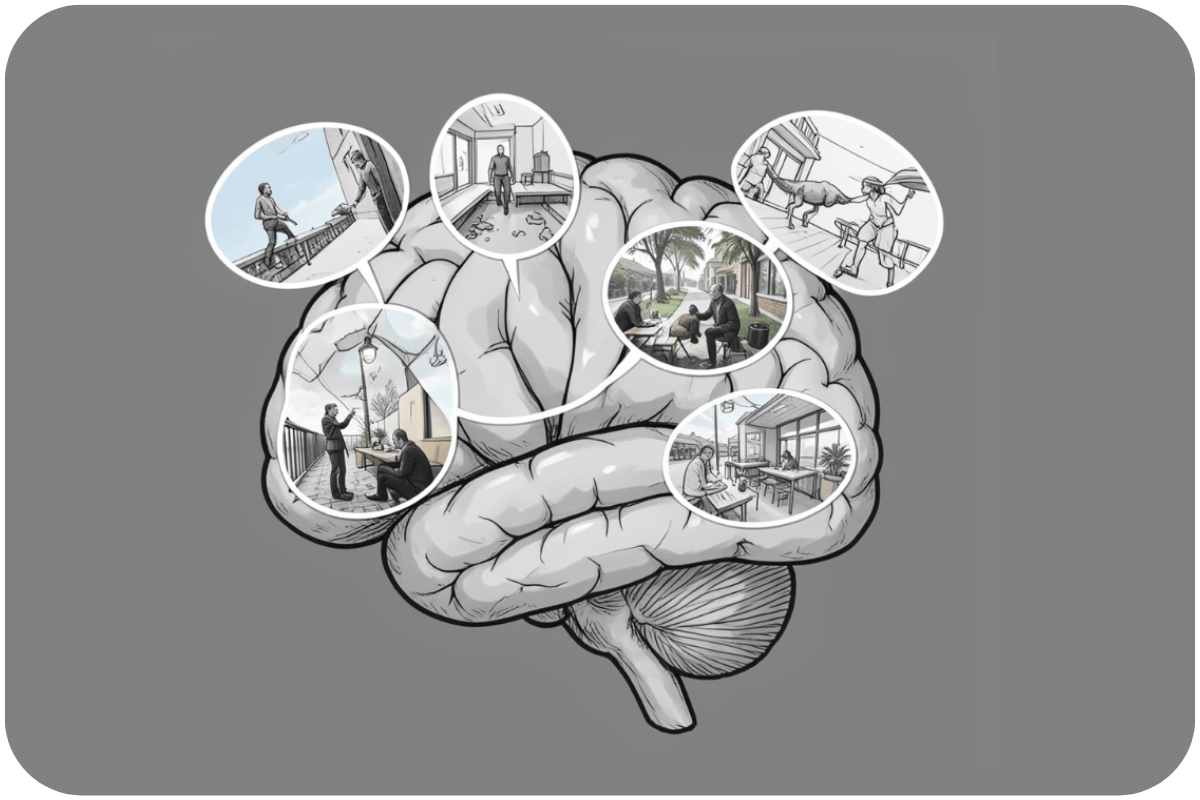
The goal wasn’t to teach people to perform better — it was to answer deeper questions:
- How is thinking possible?
- Why do we err systematically?
- What are the limits and costs of human rationality?
Mental models were conceived as the mind’s internal simulations — the structures we use to interpret situations.
They can be highly specific (“how a job interview works,” “how to drive a car”) or broad and abstract (cause and effect, trade‑offs, probability, incentives, theory of mind).
They integrate beliefs, knowledge, assumptions, experiences, heuristics, internal representations, and values.
They are the internal maps that allow us to navigate the world without recalculating everything from scratch.
Two Levels of Use — and Why Confusion Happens
Most of the confusion around mental models today comes from mixing two distinct levels of use:
1. The Descriptive Level — How We Think
At this level, mental models help us:
- Make explicit the implicit representations we rely on
- Understand why certain decisions feel obvious to some and absurd to others
- Identify biases, recurring errors, and cognitive limitations
This is the “what’s happening inside the mind?” level.
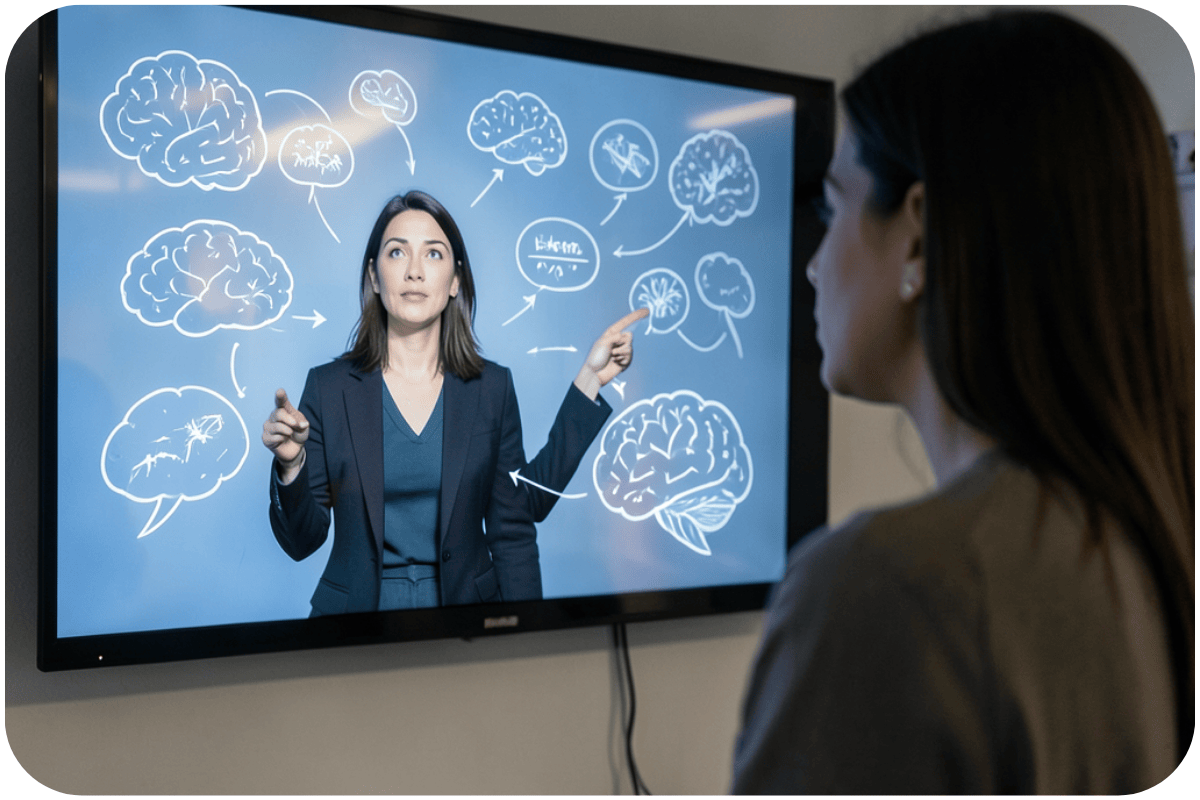
2. The Instrumental Level — How We Could Think Better
Here, mental models become tools.
If we think through representations, then the natural question becomes:
Can we choose better representations and models to achieve the goals we care about?
At this level, mental models connect directly to action, decision‑making, and performance.
Using them instrumentally means:
- Comparing different representations of the same problem
- Evaluating cognitive costs, error risks, and clarity gains
- Adjusting the model to match the real complexity of the situation
A book series designed for business professionals

How Smart People Think book series is designed to help you perform better by giving you objective tools, mental models — repeatable patterns observed in real systems — to think, predict, make decisions, and apply insights across different contexts. These models describe how the world tends to work in general, independent of any one person’s subjective experience.
If you’re curious to learn more, subscribe for updates.
The first book, focused on general mental models, is already available on Amazon.
The second book — coming soon — explores the mental traps that make us vulnerable to manipulation and poor decisions, and you can download the first chapter below.
Following that, the third book will cover mental models for understanding and improving business relationships.
The fourth will focus on Business Management, and the fifth on Business Leadership.
Mental Models and Mindset: Intersection, Not Opposition
A lot of modern confusion comes from treating mental models and mindset as competing ideas.
Mindset is best understood as a relatively stable set of mental models — especially those tied to beliefs about:
- Ability
- Effort
- Control
- Risk
- Identity
So:
- Every mindset is built on mental models
- But not every mental model becomes a mindset
Serious performance work doesn’t ignore cognition — it assumes it.
The problem arises when we try to improve results without making explicit the representations that guide action.

Why Professionals Need to Operate on Both Levels
Real‑world decisions happen under pressure — time, cost, responsibility.
Ignoring how the mind works leads to unrealistic expectations.
Ignoring the possibility of improvement leads to repeating the same mistakes.
Professionals who operate only at the descriptive level understand a lot but act little.
Professionals who operate only at the instrumental level act a lot but repeat the same patterns.
Working consciously with mental models at both levels allows you to:
- Reduce predictable errors
- Know when to trust heuristics (“good enough,” “expensive must be good”) and when to suspend them
- Align thought, decision, and context
This is where metacognition becomes essential.

Metacognition: Thinking About How We Think
Metacognition is the ability to observe, monitor, and regulate your own thinking.
It’s what allows you to shift from the content of thought (“what should I decide?”) to the process (“how am I thinking about this?”).
Using metacognition means:
- Recognizing the mental model you’re using
- Seeing its limits, assumptions, and gaps
- Evaluating whether it fits the current context
- Deciding whether to keep it, adjust it, or replace it
Without metacognition, a person can know many sophisticated concepts and still apply them automatically, out of context, or as intellectual dogma.
Metacognition also interacts with other core mental functions:
- Attention — what you prioritize
- Memory — what you retrieve to decide
- Emotion — what signals relevance and risk
- Language — how you structure the problem
Mental models are the silent infrastructure that integrates these functions.
Improving them doesn’t mean eliminating emotion or intuition — it means organizing the dialogue between these capacities more intelligently.
Final Thoughts
Treating mental models only as performance tools is too narrow.
Treating them only as explanatory concepts is incomplete.
Their real power lies in the bridge between understanding and action.
That’s the perspective guiding this work — and the reason a series of books is underway to help professionals identify, evaluate, and choose better mental models for real decision contexts, illustrated through stories of companies and public figures.
The first volume, focused on general mental models for decision‑making, is already available.
The next volume begins from a necessary — and uncomfortable — insight:
Smart people deceive themselves more often precisely because they overtrust their own models.
Grab the first chapter below.
